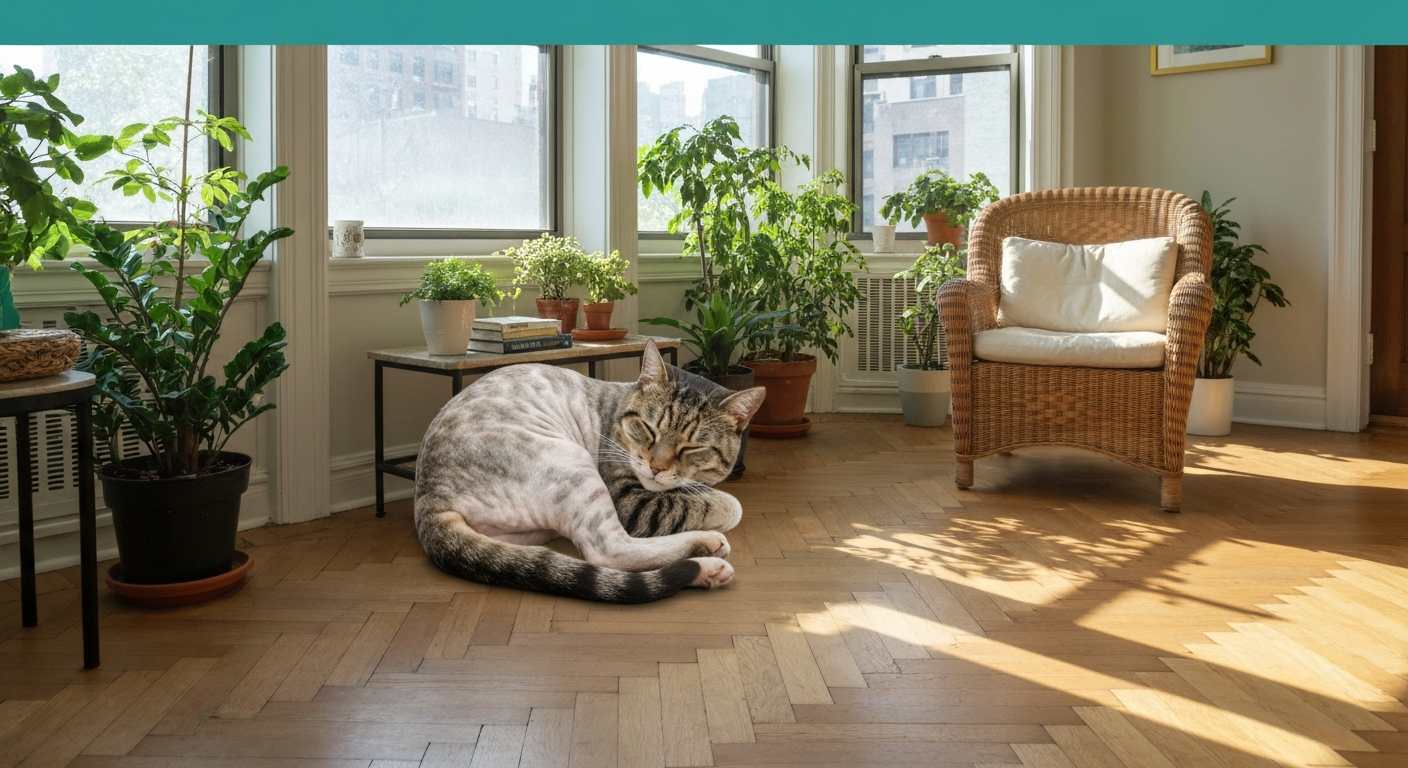
Best Emotional Support Animals for New York Apartments — A Clinician-Vetted Lineup
Informational content only. Nothing in this article constitutes medical, mental-health, or legal advice. If you believe you may benefit from an emotional support animal, please consult a licensed mental health professional licensed in New York State. For housing disputes involving an ESA, consult a New York-licensed attorney or contact your local legal aid office.
Manhattan studio. Brooklyn walk-up. Queens co-op. Whatever corner of New York City — or the broader state — you call home, the words “small square footage” and “no-pets policy” have a way of appearing on the same lease page. Yet for the estimated millions of New Yorkers living with anxiety, depression, PTSD, and a range of other qualifying mental health conditions, an emotional support animal (ESA) is not a luxury; it is a clinician-recommended therapeutic tool that may significantly reduce distress and improve daily functioning.
Under the federal Fair Housing Act (FHA) and HUD’s authoritative guidance note FHEO-2020-01 — Assessing a Person’s Request to Have an Animal as a Reasonable Accommodation Under the Fair Housing Act — housing providers with four or more units are generally required to consider reasonable accommodations for residents with disabilities, including the presence of an ESA, provided the resident holds a valid ESA letter issued by a licensed mental health professional (LMHP) licensed in New York State. That letter is the legal instrument that matters; online “ESA registries,” “certification cards,” and “national databases” carry no legal weight whatsoever and have been explicitly flagged as misleading by HUD.
With the legal framework in place, the next practical question becomes: which animals are actually well-suited to New York apartment life? The answer depends on temperament, space requirements, noise profile, allergen load, and — critically — the individualized clinical relationship between you and your treating clinician, who will determine whether an ESA is therapeutically appropriate for your specific situation. What follows is a clinician-informed, practically grounded look at the animals most commonly recommended for New York apartment-friendly ESA use, ranked with your urban lifestyle firmly in mind.
How This List Was Assembled
Each animal on this list was evaluated against four criteria that matter most in a dense urban housing context: (1) space adaptability — can the animal thrive in under 700 square feet without behavioral deterioration; (2) noise profile — is the animal unlikely to disturb neighbors through walls or floors; (3) allergen and hygiene considerations — does the animal present manageable risks in shared-hallway buildings; and (4) clinical literature support — is there meaningful peer-reviewed evidence that this species or type of animal provides measurable emotional and psychological benefit to individuals with recognized mental health conditions?
This list does not constitute a clinical recommendation. A licensed clinician will determine whether any ESA — regardless of species — is therapeutically appropriate for you specifically. What this list does is give you an informed starting point for that conversation.
1. Cats — The Quintessential New York ESA
Why Cats Work So Well in Urban Apartments
Cats have earned their status as perhaps the most apartment-compatible ESA option available to New Yorkers, and the clinical rationale is well-documented. Research published in peer-reviewed behavioral medicine journals consistently finds that the tactile act of stroking a cat — paired with the cat’s characteristic purring at frequencies between 25 and 150 Hz — can measurably lower cortisol levels and reduce both subjective and physiological markers of stress. For individuals managing generalized anxiety disorder, panic disorder, or trauma-related conditions, many clinicians find that a calm, affectionate cat may be a highly appropriate therapeutic companion.
From a purely practical New York standpoint, cats require no outdoor exercise walks (vital when you work a 10-hour day in Midtown), produce relatively low noise that rarely penetrates apartment walls, and can be litter-trained to a degree of hygiene that most reasonable landlords cannot object to on non-discriminatory grounds. Certain breeds — the Ragdoll, British Shorthair, and Scottish Fold among them — are particularly noted for low-stimulation, calm temperaments that mirror the therapeutic quality clinicians look for when considering ESA appropriateness.
It is worth noting that even “no-pets” buildings in New York cannot categorically refuse a properly documented ESA cat. Under the FHA framework codified in HUD FHEO-2020-01, a housing provider must engage in an “interactive process” and assess each accommodation request individually. A valid New York ESA housing letter from an NY-licensed LMHP is the document that initiates that process lawfully.
Practical Takeaway: If you live in a studio or one-bedroom and spend significant time working from home, a calm adult cat is often among the easiest ESAs to integrate into New York apartment life. Explore breed-specific guidance in our dedicated piece on ESA cats in New York — quiet companions for urban living.
2. Small-to-Medium Dogs — High Reward With Thoughtful Breed Selection
Why Dogs Remain the Gold Standard for ESA Therapy — and What New York Demands of Them
Dogs are the most studied animal in the human-animal bond literature. From reductions in autonomic nervous system arousal to improvements in social engagement among individuals with depression and social anxiety, the therapeutic case for dogs is robust. For New Yorkers specifically, dogs also offer a unique secondary benefit: the structured routine of daily walks imposes gentle behavioral activation — a cornerstone of evidence-based depression treatment — that many people find difficult to self-generate but achieve naturally as a byproduct of dog ownership.
The caveat, of course, is space and temperament. A high-energy Border Collie in a 450-square-foot Bushwick apartment is not a recipe for therapeutic benefit — it is a recipe for a distressed dog and a stressed owner. Clinicians and animal behaviorists consistently point toward smaller, lower-energy breeds that were historically bred for close human companionship: the Cavalier King Charles Spaniel, the French Bulldog (noting the breed’s brachycephalic health concerns), the Bichon Frisé, the Pug, and the Shih Tzu all appear regularly on apartment-appropriate ESA lists. Medium-sized breeds with calm temperaments — the Basenji, the Whippet, and the Standard Poodle — can also adapt well to apartment life when exercised adequately in the city’s extensive park system.
New York landlords may not impose breed or weight restrictions on an ESA the way they may for pet dogs, per HUD FHEO-2020-01 guidance, though housing providers may still deny or modify an accommodation if the specific animal poses a direct threat or causes substantial damage — an individualized determination, not a blanket policy. A licensed clinician’s letter, combined with responsible ownership practices, is the foundation of a successful housing accommodation. For a deeper look at which breeds our clinicians see most commonly recommended, visit our guide to ESA dogs in New York — best breeds for apartments.
Practical Takeaway: Prioritize temperament and energy level over size alone. A calm 40-pound dog may coexist more peacefully in your apartment — and do more therapeutic work — than an anxious 10-pound dog. Discuss specific breed characteristics with your clinician during the evaluation process.
3. Rabbits — A Surprisingly Powerful ESA for Quiet Apartment Dwellers
The Underrated Therapeutic Value of a Well-Socialized Rabbit
Rabbits occupy an interesting clinical space: they are quiet enough that even the most noise-sensitive neighbor will not register their presence, they are litter-trainable to a remarkably high degree, and a well-socialized rabbit can be extraordinarily affectionate — seeking out human contact, resting against the body, and responding visibly to their owner’s emotional state. For individuals whose mental health conditions make the high stimulation of a dog feel overwhelming, or whose work schedule makes the exercise demands of a dog impractical, a rabbit may be, clinically speaking, an excellent therapeutic middle ground between the independence of a cat and the interactive engagement of a dog.
Emerging animal-assisted intervention research suggests that rabbits — like other small mammals — can activate the same parasympathetic “rest and digest” response in their owners that cats and dogs do, through tactile contact and the rhythmic observation of a calm animal’s breathing and movement. Many people managing PTSD, OCD, and anxiety-spectrum conditions report finding particular comfort in the predictable, gentle routines that rabbit care requires: scheduled feeding, enclosure cleaning, and quiet floor time. That structured routine, as noted above, has its own therapeutic value independent of the animal-human bond itself.
From a housing-rights perspective, rabbits are covered under the same FHA framework as cats and dogs. HUD FHEO-2020-01 does not limit ESA protections to specific species; rather, it requires that the animal provide disability-related benefit as documented by an LMHP. A New York-licensed clinician who determines that a rabbit is therapeutically appropriate for a given client may include that species in their letter, and the housing provider is obligated to engage with that request in good faith. For a full breakdown of rabbit-specific considerations in New York, see our article on rabbits as emotional support animals in New York.
Practical Takeaway: Rabbits need more floor space than their enclosure size suggests — budget at least a few hours of supervised free-roaming time each day. A well-enriched rabbit is a calm, therapeutically effective rabbit. Discuss your daily schedule honestly with your clinician when exploring this option.
4. Guinea Pigs — Low Footprint, High Emotional Return
Why Small Pocket Pets Carry Significant Therapeutic Weight
Guinea pigs — sometimes called cavies — represent an often-overlooked tier of the best ESA for apartment New York list, particularly for residents with severe space constraints, those in shared housing, or those for whom allergies to dogs and cats make traditional companion animals untenable. Clinically, guinea pigs are highly social animals that vocalize in ways research subjects consistently describe as “comforting” and “grounding” — their characteristic “wheek” and purring sounds are soft enough to be inaudible beyond a single room but present enough to provide the auditory grounding cue that many anxiety-management protocols identify as therapeutically valuable.
For children and adults alike who are navigating trauma histories, intellectual disabilities, or social anxiety, the non-judgmental, gentle nature of guinea pigs can facilitate emotional regulation in ways that mirror the benefit documented in formal animal-assisted therapy (AAT) settings. Importantly, guinea pigs are highly social within their own species, and many clinicians who are familiar with small-mammal care suggest keeping them in same-sex pairs — a consideration that future ESA owners should discuss with both their clinician and their housing provider, since the accommodation request would need to identify all animals.
From a New York housing standpoint, a guinea pig ESA letter should be just as specific as any other: it should identify the animal, describe the nexus between the resident’s disability and the therapeutic need, and be signed by an LMHP currently licensed in New York State. Letters from unlicensed online services or out-of-state providers without established clinical relationships carry no legal protection and leave the resident vulnerable in any landlord dispute. Consult a New York-licensed attorney or your local legal aid office if you encounter housing resistance despite holding a properly issued letter.
Practical Takeaway: Guinea pigs are best kept in pairs, require a larger enclosure than many people initially assume (minimum 7.5 square feet of floor space per pair), and have a lifespan of 5–7 years — a commitment that should be part of your clinician conversation.
5. Birds (Particularly Parrots and Cockatiels) — Social Connection Through Song and Routine
Avian ESAs and the Unique Therapeutic Niche They Fill
Birds occupy a distinctive place in the human-animal bond literature. Unlike mammals, birds do not offer the tactile warmth that drives much of the cortisol-reduction research, but they compensate with extraordinary social mimicry, routine-anchoring behavior, and — for certain individuals — a profoundly meaningful sense of being “heard.” Cockatiels, in particular, are among the most frequently cited avian ESA species: they whistle, mirror human emotions, seek physical closeness on the shoulder or arm, and adapt well to the daily rhythms of apartment life without the outdoor-exercise requirements of dogs.
For individuals managing depression, social isolation, or grief — conditions in which the absence of responsive social interaction is itself a symptom — a parrot or cockatiel’s vocalizations and observable emotional responsiveness can provide a form of low-stakes social engagement that helps maintain conversational and relational skills. Some individuals who find face-to-face human interaction overwhelming during depressive or anxious episodes report that caring for a bird — and receiving its responses — provides enough social stimulus to prevent complete withdrawal. Clinicians working with clients in these presentations sometimes find avian ESAs worth exploring in the therapeutic conversation.
A meaningful caveat for New York apartment dwellers: some parrot species — African Greys, Amazons, Macaws — are capable of producing significant noise that can reasonably disturb neighbors. This is not grounds for a housing provider to deny an ESA accommodation outright, but it is a factor in responsible ESA selection that your clinician and you should discuss honestly. The ESA letter is a legal instrument, not a shield against reasonable neighbor relations, and the best ESA is always one that supports your mental health while being manageable within your specific living context.
Practical Takeaway: If you choose an avian ESA, discuss noise level and lifespan (some parrots live 50–80 years) carefully with your clinician. Start with a species evaluation, not just a species name — individual birds vary considerably in temperament.
6. Fish — A Specialized ESA for Mindfulness-Oriented Mental Health Support
When the Goal Is Grounding, Observation, and Calm — Not Tactile Contact
Fish may seem an unlikely entry on a “best ESA for apartment New York” list, and it is important to be precise about the clinical framing here. Fish are not tactile companions in the way mammals are. They cannot be held, they do not respond to their owner’s name, and the mechanism of their therapeutic benefit is quite different from that of a dog or a cat. The benefit that many clinicians and clients identify in fish-keeping is rooted in mindfulness and attentional anchoring: the act of observing fish in a well-maintained aquarium has been shown in published research to reduce heart rate and blood pressure, extend focused attention, and induce a meditative state consistent with the goals of mindfulness-based stress reduction (MBSR) protocols.
For individuals whose primary mental health challenges involve hyperarousal, dissociation, insomnia-related anxiety, or rumination, the structured, visually absorbing nature of a home aquarium can serve as a legitimate therapeutic anchor — particularly during the evening hours when intrusive thoughts tend to escalate. Several studies conducted in clinical and non-clinical settings have found that aquarium observation produces measurable improvements in mood and reductions in agitation even in populations with dementia and chronic pain, lending credibility to its therapeutic value in a broader mental health context.
From a practical and housing standpoint, fish are among the simplest ESAs to accommodate. They are silent, hypoallergenic, and have a negligible physical footprint within an apartment. However, prospective ESA fish owners should be aware that the therapeutic value of a fish as an ESA depends on a genuine, clinician-supported nexus between the animal and the owner’s documented disability — and that a licensed clinician will assess that nexus on an individualized basis, as with any ESA evaluation.
Practical Takeaway: Fish work best as an ESA when mindfulness and visual grounding are specifically identified as part of your therapeutic plan. Discuss whether this aligns with your treatment goals before pursuing an ESA letter for an aquatic animal.
7. Miniature Horses — A Rare but Legally Protected Option
Understanding When a Miniature Horse May Be Appropriate — and What New York Housing Law Says
Miniature horses are explicitly recognized under HUD FHEO-2020-01 as animals that housing providers must consider for reasonable accommodation requests alongside dogs and other species. This is not a loophole or an edge case; it is federal guidance. That said, a miniature horse as a New York apartment ESA is — to state the obvious — an exceptional situation that requires exceptional justification, available space (likely a ground-floor unit with outdoor access or a suburban New York property with a yard), and a particularly detailed and specific clinician-authored letter establishing clear therapeutic nexus.
There is legitimate clinical literature supporting the use of equine-assisted therapy for a range of conditions including PTSD, autism-spectrum conditions, and depression. Miniature horses, specifically, have been documented in animal-assisted intervention contexts as providing meaningful emotional regulation support for certain populations. The HUD guidance acknowledges this, noting that housing providers “should consider” miniature horses as ESAs but may apply a slightly expanded set of individualized factors — including whether the specific dwelling can reasonably accommodate the animal’s size and hygiene needs — compared to smaller animals.
For New York City residents in particular, a miniature horse ESA is almost certainly impractical in a standard apartment context. For those in suburban Westchester, Long Island, the Hudson Valley, or other parts of New York State with property access, the conversation becomes more realistic. In all cases, the evaluation process with a licensed New York clinician is the appropriate place to begin — not an online registry or a generic letter template. If a housing provider denies an accommodation for a miniature horse, consult a New York-licensed attorney, as the legal analysis is nuanced and highly fact-specific.
Practical Takeaway: Unless you have ground-floor access, outdoor space, and a documented clinical need that specifically points toward equine interaction, a miniature horse is unlikely to be the right ESA for most New York apartment situations. But it is worth knowing the option exists and is federally recognized.
8. Hedgehogs and Other Exotic Small Mammals — Niche but Viable With the Right Profile
Understanding the Therapeutic and Regulatory Landscape for Unconventional ESAs in New York
Hedgehogs present an interesting case study in the intersection of ESA law and local wildlife regulations. As of the time of publication, hedgehogs are legal to own in New York State, though they are banned in New York City specifically under the NYC Health Code, which classifies them as wild animals. This is a critical distinction: federal FHA protections do not override local wildlife or public-health ordinances that are applied neutrally and not specifically targeted at ESA owners. If you live within the five boroughs, a hedgehog ESA will almost certainly not be accommodated on public-health grounds. If you live in New York State outside of NYC, the calculus is different and worth discussing with both your clinician and a local attorney.
For those in eligible areas, hedgehogs have been described in the animal-assisted therapy literature as effective anxiety-reduction tools for individuals who find the relative independence of hedgehog care (they are solitary, nocturnal, and low-maintenance during the day) well-suited to their lifestyle. The sensory experience of carefully handling a hedgehog — including the focused attention required to avoid its quills — has been anecdotally reported by some clients and clinicians as a form of functional mindfulness exercise. This is an emerging area of the literature and should be discussed with a knowledgeable clinician rather than assumed to apply universally.
Other exotic small mammals — sugar gliders, ferrets (banned in NYC), chinchillas — follow a similar pattern: legally variable across different parts of New York State, potentially therapeutically useful in the right clinical context, and almost always requiring a more detailed and specific ESA letter that explicitly addresses the unusual nature of the accommodation request. The stronger and more individualized the clinical letter, the more robust the housing accommodation argument. Generic or template letters — the kind sold by online “registration” services — will not withstand scrutiny in these situations.
Practical Takeaway: Before pursuing an exotic small mammal as an ESA anywhere in New York, verify local legality with your municipal animal control office and consult both a licensed clinician and a New York-licensed attorney. The FHA does not override wildlife law.
Getting Your New York ESA Letter: What the Process Should Look Like
Whichever animal you and your clinician determine is therapeutically appropriate, the legal instrument that protects your housing rights is always the same: an ESA letter issued by a licensed mental health professional currently licensed in New York State. That means an LCSW, LMHC, LMFT, licensed psychologist, psychiatrist, or — where applicable under New York law — a licensed primary-care provider with relevant scope of practice.
The letter must establish three things that HUD FHEO-2020-01 identifies as the core elements of a valid accommodation request: (1) that the requester has a disability as defined under the FHA; (2) that there is a disability-related need for the ESA; and (3) that the specific animal requested provides support related to that disability. A legitimate clinician will not issue this letter without conducting a genuine clinical evaluation — whether through an in-person or synchronous telehealth session — because doing so would expose them to professional liability and expose you to a letter that any sophisticated housing provider or housing court will immediately recognize as inadequate.
Online “ESA registries” that offer instant letters, ID cards, vests, or “national database” registration for a flat fee without a clinical evaluation are — without exception — fraudulent products. HUD has stated this explicitly. They will not protect you in a housing dispute, and they may damage your credibility in any subsequent legitimate accommodation request. Learn more about the FHA accommodation process and what a proper letter should contain in our detailed guide to New York ESA housing letters and FHA protections.
Training, Behavior, and Responsible ESA Ownership in New York
An ESA letter grants housing access rights; it does not grant behavioral carte blanche to your animal. HUD FHEO-2020-01 is explicit that housing providers may remove an ESA if it poses a direct threat to others or causes substantial physical damage to property — and a New York court will apply this standard if a dispute reaches litigation. Responsible ESA ownership includes basic training and socialization appropriate to the species, proactive communication with neighbors and building management, and consistent hygiene and care practices that preserve the shared living environment.
For dog owners specifically, basic obedience training — sit, stay, leash manners, quiet command — is not just courtesy in a New York apartment building; it is a practical protective measure for your accommodation rights. For guidance on what foundational training looks like for common ESA species in a New York context, our article on ESA training basics in New York is a useful starting point.
A Note on ESAs and Air Travel
One point that deserves clear, unambiguous statement: as of January 2021, the U.S. Department of Transportation revised its rules under the Air Carrier Access Act, and emotional support animals no longer receive the same cabin-access accommodations that psychiatric service dogs do. Airlines now treat ESAs as regular pets subject to standard pet policies and fees. An ESA letter does not provide air-travel rights. If you require an animal to accompany you in the cabin during air travel for disability-related reasons, the relevant legal category is a trained Psychiatric Service Dog (PSD), not an ESA. These are distinct legal and clinical categories. Consult your clinician and a qualified service-dog trainer for information about the PSD pathway.
Summary Table: New York Apartment ESA Comparison
| Animal | Space Adaptability | Noise Profile | NYC Legal Status | Tactile Comfort Level |
|---|---|---|---|---|
| Cat | Excellent | Very Low | Legal | High |
| Small/Medium Dog | Good (breed-dependent) | Moderate | Legal | Very High |
| Rabbit | Good | Very Low | Legal | High (when socialized) |
| Guinea Pig | Excellent | Very Low | Legal | Moderate |
| Bird (Cockatiel) | Excellent | Low-Moderate | Legal | Moderate |
| Fish | Excellent | Silent | Legal | None (visual/mindfulness benefit) |
| Miniature Horse | Poor (NYC); Better upstate | High | Situational | Very High |
| Hedgehog | Excellent | Very Low | Banned in NYC; Legal upstate | Low-Moderate |
Important disclaimer: This table is a general informational guide only. Local regulations change, and individual animal temperament varies significantly. Always verify current NYC and New York State regulations with your local animal control authority before acquiring any animal. Nothing in this article constitutes medical, mental-health, or legal advice. Consult a licensed mental health professional licensed in New York State to determine whether an ESA may be therapeutically appropriate for you, and consult a New York-licensed attorney or local legal aid office for any housing dispute involving an ESA accommodation request.
Ready to Begin? The Right First Step Is a Clinical Conversation
The best ESA for your New York apartment is not determined by a listicle — it is determined by a licensed clinician who knows your history, your living situation, your therapeutic goals, and your capacity for animal care. This article exists to inform that conversation, not to replace it. If you believe you may qualify for an emotional support animal and want to explore whether a New York ESA letter may be appropriate for your situation, the place to start is a genuine clinical evaluation with an LMHP licensed in New York State.
At ESALetter, every evaluation is conducted by a licensed New York mental health professional. There are no registries, no ID cards, no instant approvals — only a real clinical process that results in a document built to withstand landlord scrutiny and, where necessary, legal review. Learn more about how our licensed clinicians support New York residents through every step of the FHA accommodation process.
Ready to start your New York ESA letter?
Licensed New York clinician review. Compliant with state law.
Get My New York ESA Letter